
The short answer
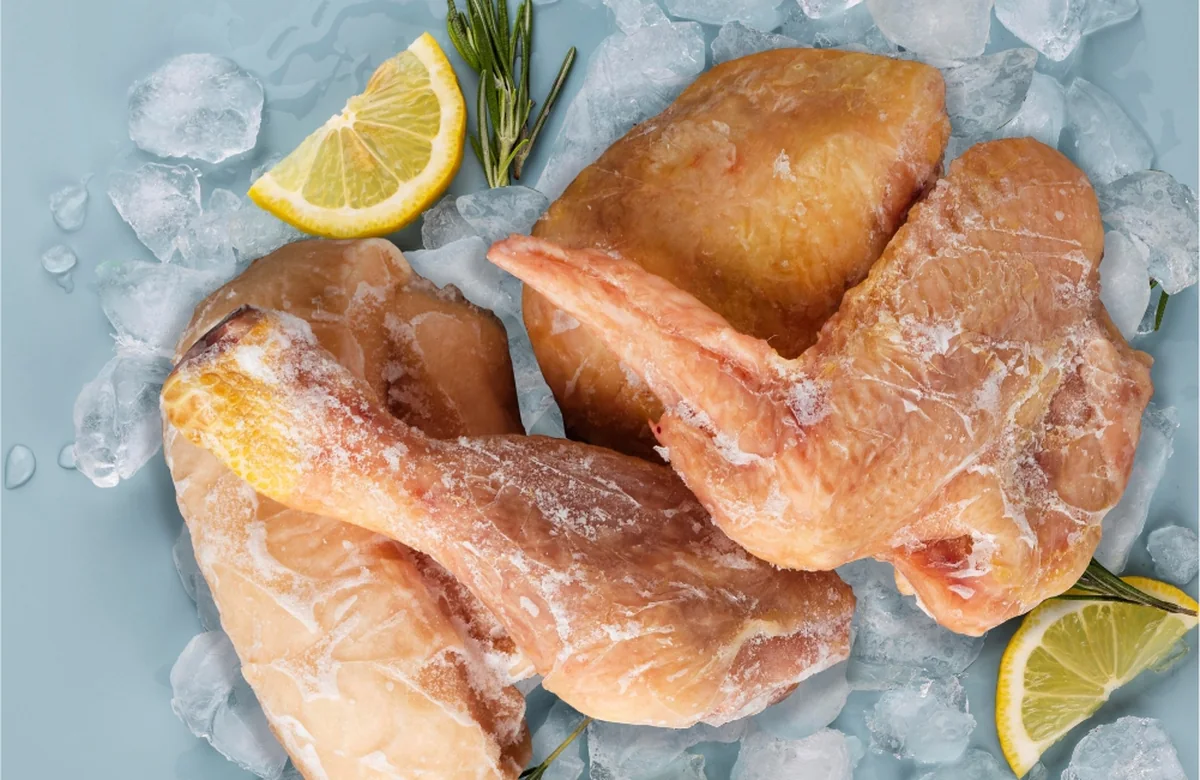
Keep commercially frozen kebabs continuously frozen at the temperature stated on their pack; the historical Migel site referred to -18°C or below. Put purchases away promptly, keep the bag closed, and take out only what you will cook. The package remains the primary source for storage life, “cook from frozen” directions and whether a thawed item may be used.
Why temperature stability matters
Freezing slows microbial growth but does not sterilise food. Temperature swings can damage texture and, after sufficient warming, create a safety problem. A freezer display also shows air temperature at one point, not necessarily the warmest food. Avoid storing frequently used frozen snacks in the door, leave room for cold air to circulate and investigate repeated softening or heavy ice build-up.
A delivery decision example
On delivery, check the pack before putting it away. A sealed pack whose pieces remain hard and icy is different from one that is warm, leaking or fully soft. Record a damaged seal or clearly warm delivery and contact the seller. If you cannot establish how long a perishable chicken product was above safe refrigeration temperature, the prudent choice is not to refreeze and hope. Do not taste food to decide whether it is safe.
Opening and resealing
Open the pack with clean, dry hands or utensils. Remove the required number of pieces without leaving the full bag on the counter. Press out excess air if the packaging allows, seal it securely, note the opening date and return it to the freezer immediately. Keep raw or potentially raw chicken products separated from ready-to-eat food and clean any surface they touch.
Power cuts and accidental thawing
Keep the freezer door closed during an interruption. The safe decision after a power cut depends on time, temperature, ice crystals, product type and official local advice. Do not use smell alone. If the pack is still hard with ice crystals, follow the manufacturer or competent food-safety authority. If it is fully thawed or has been warm for an unknown period, discard when safety cannot be established.
What this guide cannot tell you
The website cannot determine the condition of a pack in your kitchen, and it does not publish an invented shelf life for Migel products. The printed label, batch information and manufacturer response control. This guide explains the decision process so a reader knows what evidence to check; it is not a substitute for a cold-chain investigation or professional food-safety advice.
Sources and review boundary
For general food-safety principles, this editorial desk prefers competent government and food-safety sources, including the Food Safety and Standards Authority of India and the USDA Food Safety and Inspection Service. A source from another country helps explain general handling but does not override Indian law, a recall, or the directions on a product sold in India. Historical Migel information is treated as archive evidence, not automatic proof of a current formulation.
Editorial judgement
The safest useful answer is often a process rather than a universal number: identify the product, read its label, control the cold chain, calibrate the appliance and stop when evidence is missing. That approach is less catchy than a single timer but more useful across different kebab sizes, recipes and appliances. Report a factual correction with the page URL and supporting source to server@migelfoods.com.
Next: choose a product, visit the cooking hub, or ask about availability.