
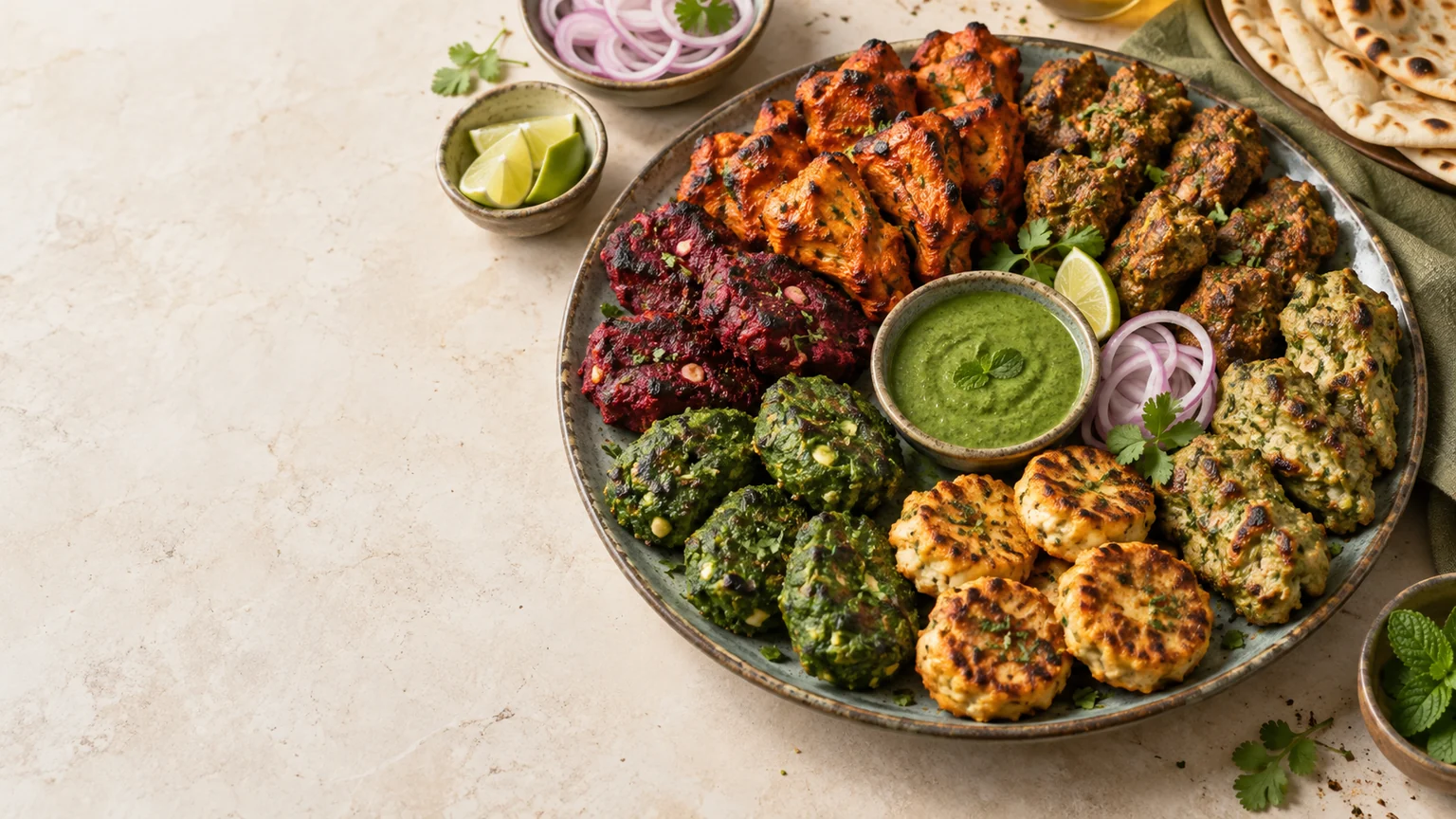
Begin with the product’s own cooking method
Cook the kebabs fully according to their current pack before building any of these meals. Prepare cold vegetables and sauces separately, use clean utensils and avoid returning cooked food to a plate that held uncooked chicken. The formats below are flexible assembly plans; seasoning and allergens depend on the exact kebab, bread and sauce.
1. A wrap that stays structured
Warm a roti or other flatbread, spread chutney or yoghurt sauce in a thin layer, then add sliced cooked kebab, cabbage or lettuce, onion and a squeeze of lime. Keep wet tomato or cucumber modest if the wrap will travel. Place the filling below the centre, fold the sides and roll tightly. A spinach or beetroot cottage-cheese kebab suits a vegetarian version; a chicken kebab can take a sharper onion-lime profile.
2. A balanced rice bowl
Use rice or millet as the base, add a cooked kebab, two contrasting vegetables and a spoonable sauce. A useful ratio is to let the grain, vegetables and protein component remain visually distinct so diners can adjust each bite. Pickled onion adds acidity, while cucumber cools a spiced chicken kebab. Nutrition depends on verified labels and portion sizes, so avoid calling the bowl “high protein” unless you calculate it from current packaging.
3. A crisp sandwich instead of a soggy one
Toast the bread first. Slice the cooked kebab only after it has rested briefly, then layer it with a dry crunchy vegetable and a restrained spread. Put juicy chutney between the kebab and a protective lettuce layer rather than directly against the bread. This is particularly useful for a lunch box, but chilled storage and transport time still need attention.
4. A party platter with real choice
Offer two kebab styles, one mild dip, one herb chutney, lime, onion and a neutral bread or cracker. Label vegetarian and chicken items clearly and keep their serving utensils separate. Serve in smaller replenished batches instead of leaving a full platter at room temperature. The goal is not more decoration; it is easy identification, safe handling and enough contrast for guests.
5. A quick noodle or stir-fry finish
Cook vegetables and noodles first, then fold in sliced, fully cooked kebabs at the end so they heat through without breaking. Match the sauce to the product’s existing spice profile and begin with less salt because frozen savoury items may already be seasoned. A green herb-led kebab works with a lighter sauce; tikka-style chicken can support tomato or pepper notes.
6. A flatbread or pasta topping
For flatbread, pre-cook the kebab, slice it and add it late enough to avoid drying. For pasta, stir cooked pieces into the finished sauce just before serving. Neither format requires covering every bite in cheese. Acid, herbs and vegetables can provide contrast while keeping the kebab recognisable. Treat these as serving templates and document your own successful portion and timing.
Sources and review boundary
For general food-safety principles, this editorial desk prefers competent government and food-safety sources, including the Food Safety and Standards Authority of India and the USDA Food Safety and Inspection Service. A source from another country helps explain general handling but does not override Indian law, a recall, or the directions on a product sold in India. Historical Migel information is treated as archive evidence, not automatic proof of a current formulation.
Editorial judgement
The safest useful answer is often a process rather than a universal number: identify the product, read its label, control the cold chain, calibrate the appliance and stop when evidence is missing. That approach is less catchy than a single timer but more useful across different kebab sizes, recipes and appliances. Report a factual correction with the page URL and supporting source to server@migelfoods.com.
Next: choose a product, visit the cooking hub, or ask about availability.